Imaginatio
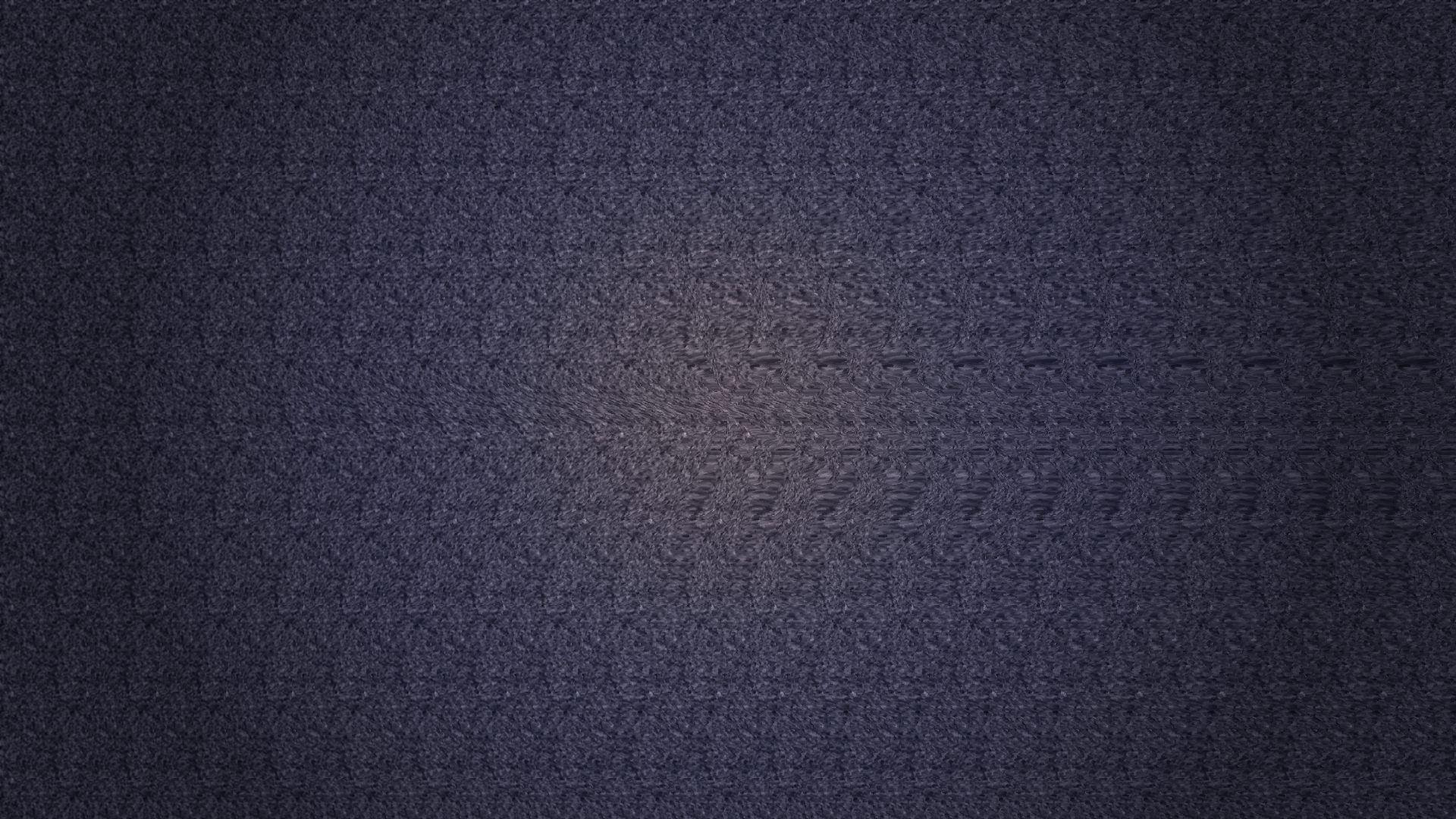
Most stereograms are puzzles. This one is a place.
A study in smooth depth, fractal texture, and the moment your brain locks into hidden geometry—plus the ultra-deep ambient piece we made to listen to while you look.
You’ve probably seen a magic-eye poster. You stare. Your eyes strain. A dolphin or a spaceship pops out. Then it’s over. But what if a stereogram weren’t a trick—what if it were engineered as a perceptual instrument? Something that rewards calm instead of effort, and holds your attention without fracturing it?
That’s what we set out to build. Consciousness Lock — Masterpiece v1 is a random-dot stereogram designed from first principles: smooth depth gradients, rotational symmetry, band-limited fractal texture, and a color grade that keeps you in deep indigo without fatigue. And because the best way to look at it is to get still, we made a companion piece of music—an ultra-deep meditative ambient track engineered for exactly that.
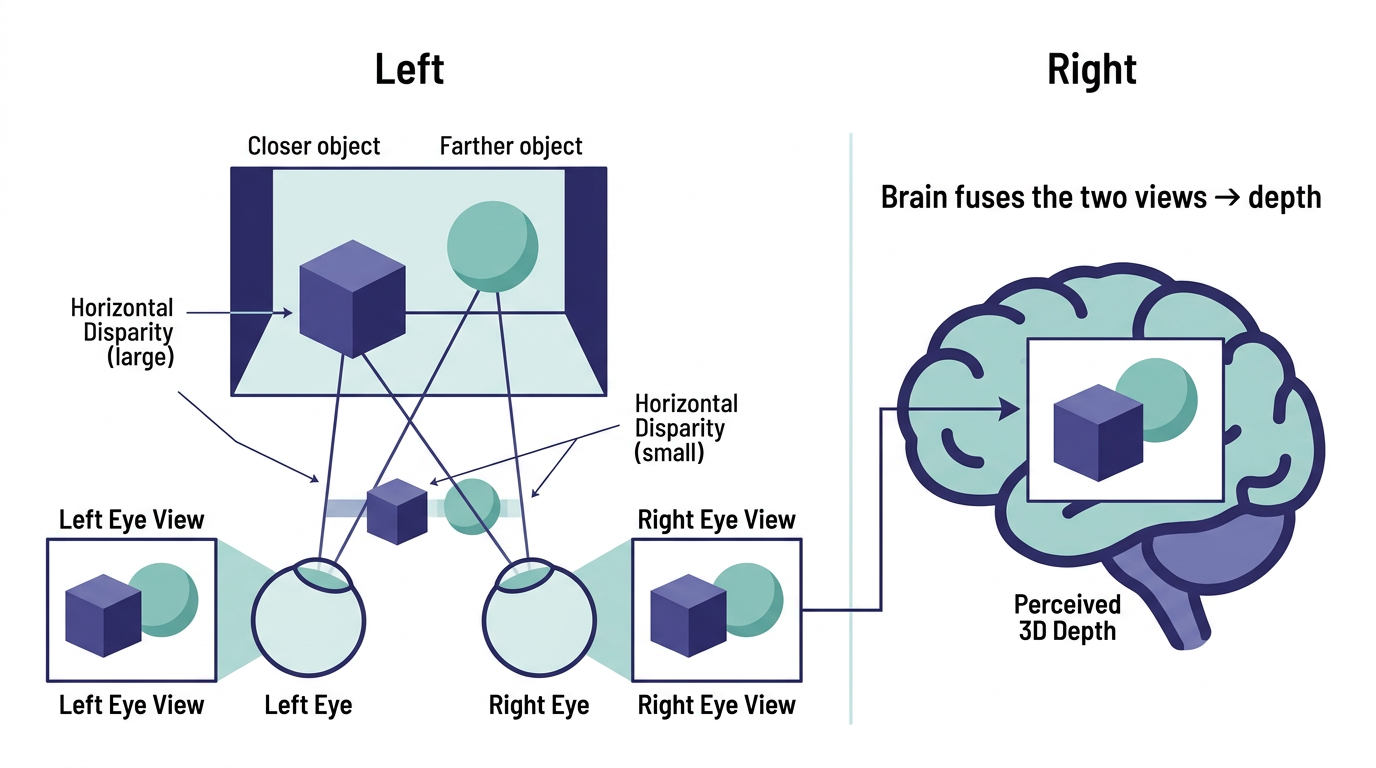
How stereograms work (without the jargon)
Your eyes are a few centimeters apart. So each eye sees the world from a slightly different angle. Your brain compares those two views and turns the tiny horizontal differences into depth. That’s binocular disparity—and it’s why we have 3D vision.
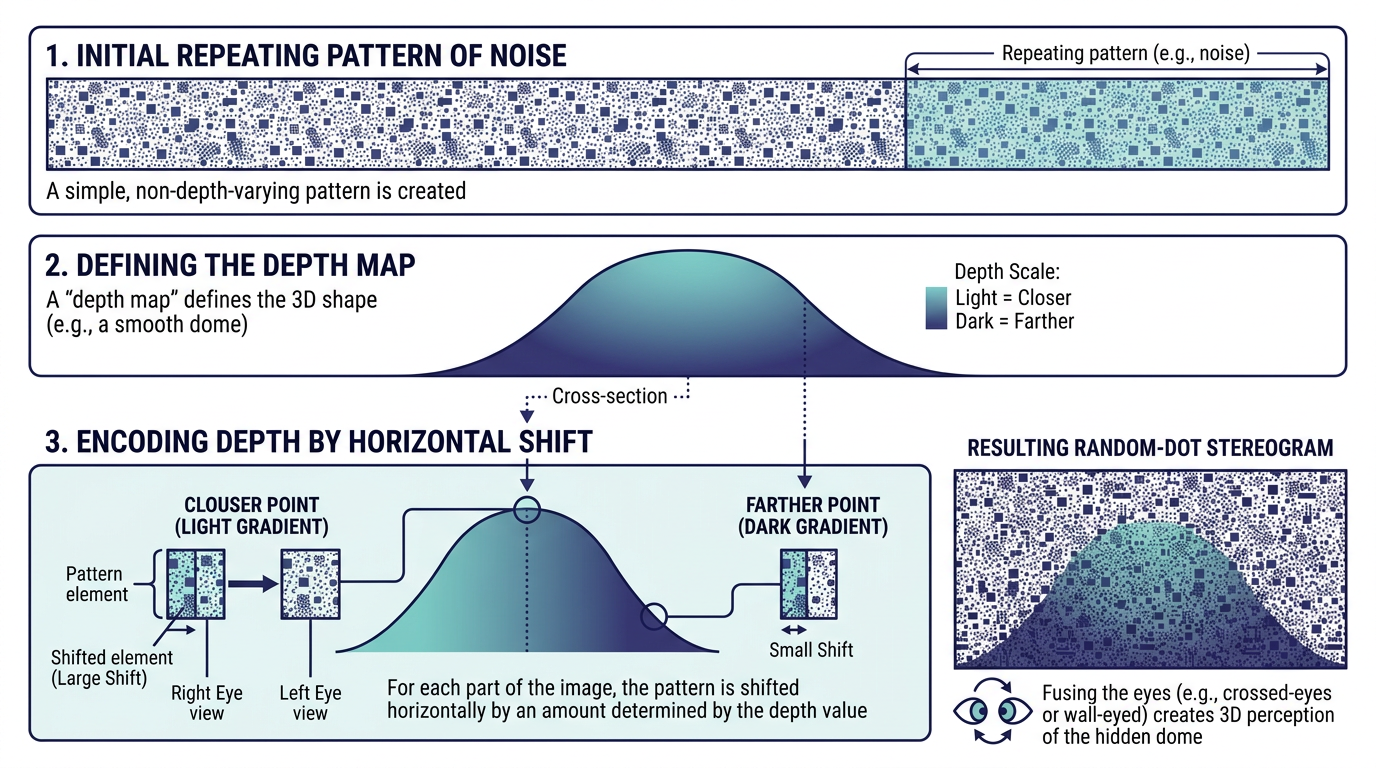
A stereogram doesn’t give you two separate images. It gives you one repeating pattern—dots, noise, texture—and it shifts that pattern horizontally by different amounts in different places. Where the shift is larger, your brain interprets “closer.” Where it’s smaller, “farther.” So the “hidden” 3D shape isn’t drawn at all. It’s encoded in the horizontal offsets. When you relax your gaze and let your eyes fuse the pattern at the right depth, the shape appears. You’re not imagining it. Your brain is solving a geometry problem.
Why most stereograms hurt (and how we fixed it)
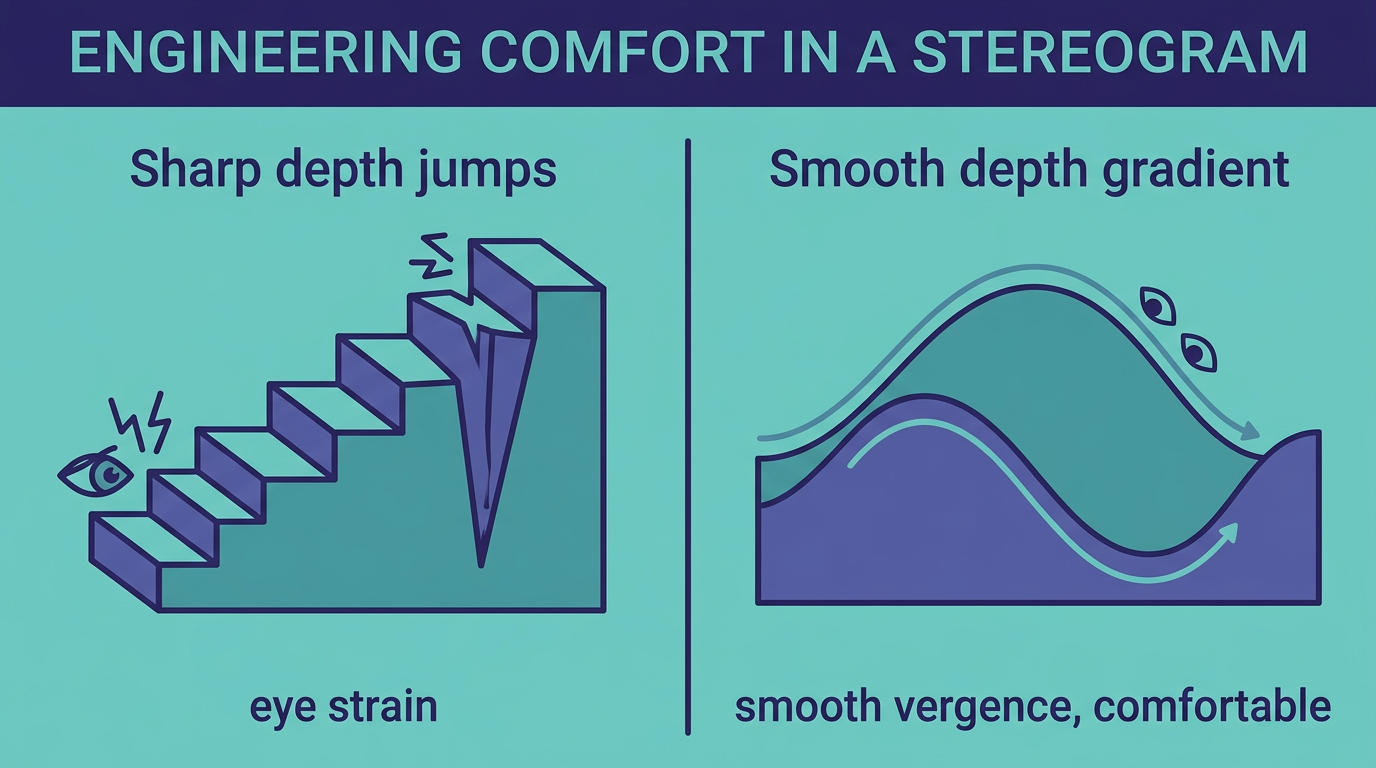
Classic magic-eye images often use sharp depth jumps. Big steps from near to far. That makes the 3D pop dramatically—but it also forces your eyes to snap vergence (the angle at which your eyes converge) in big steps. Result: strain, headache, and the urge to look away.
We wanted the opposite. Smooth depth equals smooth vergence. So we built the hidden shape from a Gaussian dome at the center—a radial falloff that has no edges, no discontinuities—plus rotational harmonics (ten-fold symmetry) so the form has structure without sharp spikes. Then we added a radial ripple and a soft halo ring for richness. Every gradient is smoothed. We cap the maximum disparity (how far any pixel can shift) and run the shift map through a Gaussian blur so the demand on your eyes never jumps.
Too regular is boring. Too chaotic is stressful. We tuned the depth and the texture to sit in the middle—immersive without overload.
The texture: fractal, but not cruel
The “random” dots aren’t random. They’re a multi-octave fractal tile: several layers of noise at different scales, blurred and blended, so the result has detail but no harsh edges. We band-limited it (reined in the highest frequencies) so the pattern doesn’t glare. Contrast is clamped to a midtone envelope—not flat, not harsh. The goal was the kind of texture you find in nature: neither sterile nor overwhelming.
We didn’t guess the parameters. We ran a deterministic parameter search on a low-res proxy: 28 candidates, each scored for disparity smoothness, depth richness, texture balance, and contrast. The best candidate became the full-resolution render. So Masterpiece v1 is both designed and optimized—geometry and signal processing in one pipeline.
Color and light: deep indigo, no spikes
Brightness extremes fatigue the retina. We kept luminance in a narrow band and graded the image into deep indigo with a hint of teal, a subtle warm core at the center, and a soft vignette so the edges fall away. The result is cosmic and spacious—consciousness-expanding but calm. No brightness spikes. No cinematic drama. Just a field you can sit in.
What happens when you lock in
When fusion stabilizes, the surface texture seems to disappear. Your saccades (the little jumps your eyes make) slow down. Depth layers form. Attention narrows. You have to become still to see the depth—and once it appears, stillness sustains it. The image rewards calm. That’s why we call it Consciousness Lock.
How to view it
- Lower screen brightness to about 30–40%.
- Sit roughly 60 cm from the screen.
- Relax your focus beyond the surface—as if you’re looking through the image at something farther away.
- Let depth form. Don’t force it.
- Hold gently for 3–6 minutes if you can.
- When you’re done, look at something in the distance to reset your eyes.
If you feel strain, stop. Comfort is part of the design.
The companion piece: sound for stereogram viewing
We engineered an ultra-deep meditative ambient soundscape to pair with this image: visual immersion and sustained attention in one experience. It’s not background music—it’s part of the instrument.
- Slow evolving drone in D minor, D + A + E harmonic field.
- 50 BPM perceived tempo but no drums—no percussion, no melody hooks.
- Granular synthesis pad, wide stereo field, cathedral-scale reverb.
- Subtle 7 Hz pulsing texture embedded in the harmonic layer (gentle modulation, not rhythm).
- Low sub-bass drone at 58 Hz for grounding.
- Airy high-frequency shimmer above 8 kHz, extremely soft.
- Minimal harmonic movement—one chord every 2–3 minutes. No sudden changes, no crescendos.
- Long sustained tones, slow breathing amplitude swells (~0.12 Hz).
- Warm analog-style textures, tape saturation, no brightness spikes.
- 12 minutes, seamless, immersive, hypnotic.
Consciousness Lock — Immersive — the full 12-minute piece with the masterpiece and sound together. Put it on, dim the lights, and watch (or just listen). The sound and the visual were designed as one—deep indigo, cosmic, spacious, and calm.
What we actually built
This isn’t mysticism. It’s not magic. It’s mathematics meeting perception. The pipeline: a depth field (Gaussian dome + rotational harmonics + radial ripple + halo), a fractal tile for the pattern, forward-copy autostereogram synthesis with a smoothed shift map and a hard disparity cap, then color grade and vignette. The whole thing is reproducible—we have a deterministic Python script that runs the parameter search and renders the final PNG. When the math is tuned for comfort, perception becomes quiet. That’s the lock.
Consciousness Lock sits at the intersection of geometry, vision science, signal processing, and computational aesthetics. We built it to be a place you can stay—not a puzzle you solve and forget.